
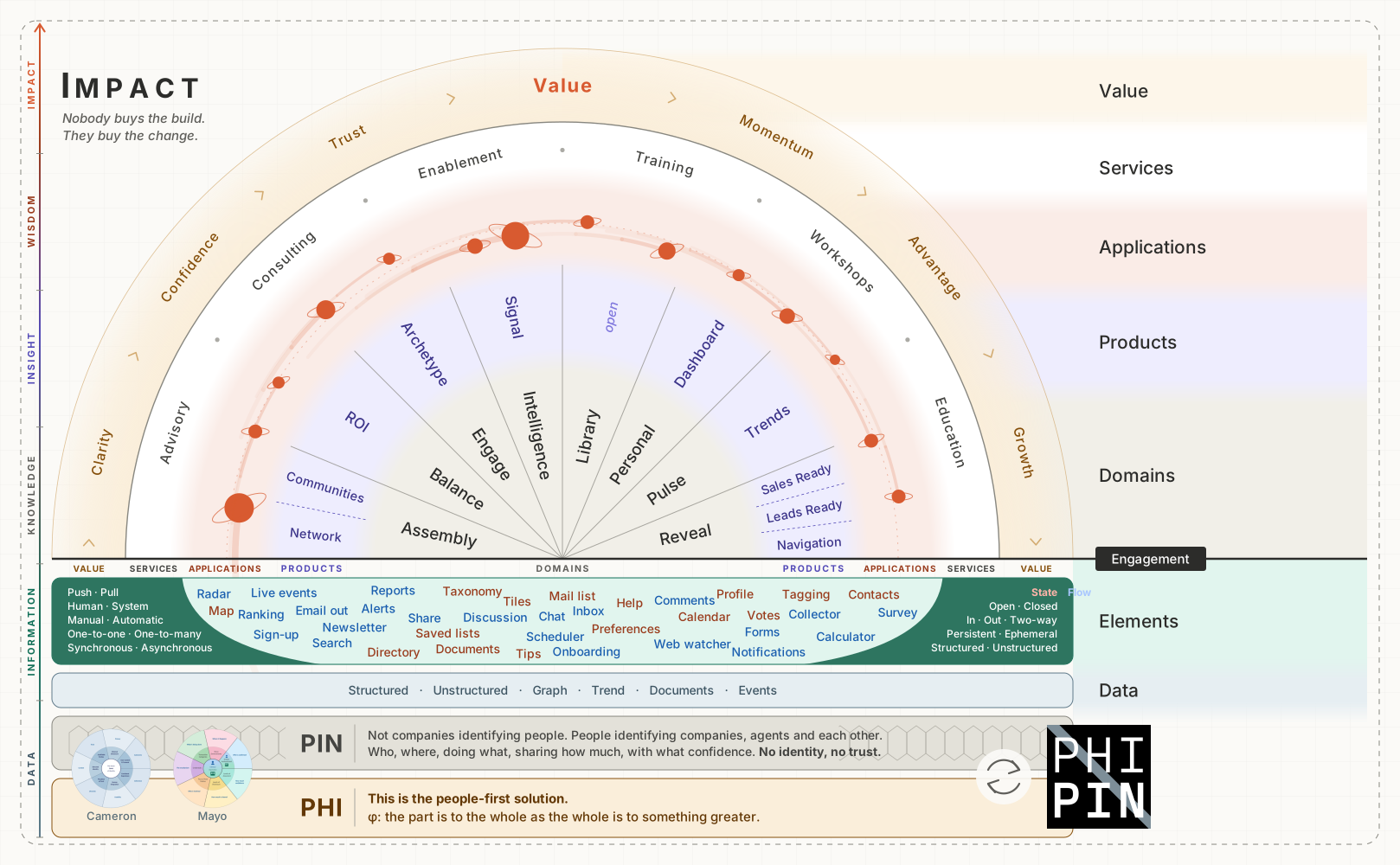
Nobody buys the build. They buy the change.
For sixty years, business technology has been built to hold things: records, transactions, the official version of events. It did that job well, and it still does. But it was built for organisations that pushed things out, not for people who expect to be engaged.
There is a transition happening: from producer efficient supply chains to customer effective demand networks, from pushing things out to engaging people in what happens next. It is not a migration: nobody needs to rip out the systems of record. What changes is what sits on top of them, and why. Engagement needs a good reason: something worth a person's time, attention and trust. Give them one, and they engage. Fail to, and no amount of technology will help.
This is not a change in software. It is a change in thinking. What we store is state: where things stand. What engagement adds is flow: where things are going. Put the two together, and the data an organisation already holds becomes an understanding of direction. The structure is the same for every organisation. What it is for has changed.
The structure was always there. The thinking is what's new.
Structured Thought
The drawing is also how philpin.com is put together. The menu, the squares, and the domain pages all read from the same structure, so what you see here is the shape of everything you can explore. Its companion is the Business Equation, which shows where the change lands in a business.